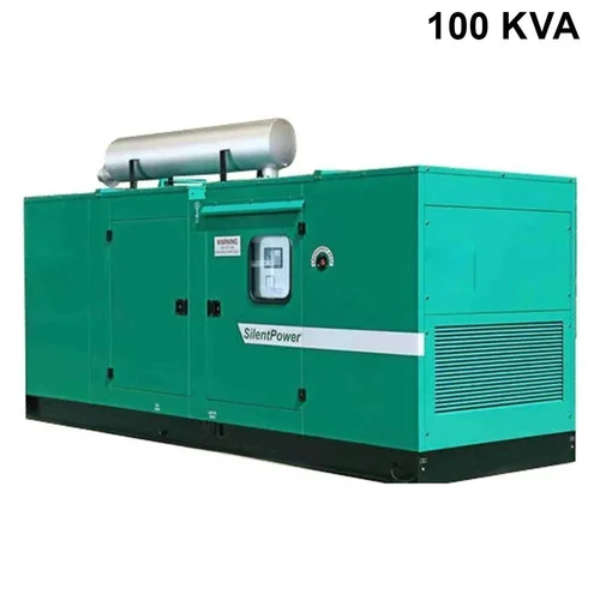
Two facilities may use DG sets of similar capacity but have completely different maintenance requirements. One generator may operate only during occasional grid failures, while another may run frequently as part of normal site operations.
This is why evaluating an AMC for DG Sets should begin with operating requirements rather than simply comparing contract prices.
Start With Generator Criticality
Ask what happens if the DG set fails when it is needed.
For some facilities, the consequence may be limited inconvenience. In manufacturing plants, pharmaceutical facilities, process industries, commercial buildings, and infrastructure operations, backup power failure can have a much wider impact.
Critical applications generally require closer maintenance planning and clearly defined support arrangements.
Compare What the AMC Actually Includes
AMC quotations can look similar on the first page while covering significantly different services.
Plant teams should examine:
- Number of scheduled maintenance visits
- Inspection activities included
- Breakdown attendance provisions
- Labour coverage
- Consumable treatment
- Replacement component terms
- Testing included after maintenance
- Service reporting
- Contract exclusions
- Escalation process for major faults
This makes quotations easier to evaluate on scope rather than headline price.
Preventive Maintenance Should Reflect Usage
Running hours are important, but they are not the only consideration.
Generators can deteriorate while standing idle. Batteries, hoses, fluids, terminals, seals, connections, and other components may still require periodic attention.
A suitable AMC schedule should therefore account for equipment age, operating hours, environmental conditions, manufacturer recommendations, previous breakdowns, and site criticality.
Look at the Alternator and Electrical Side
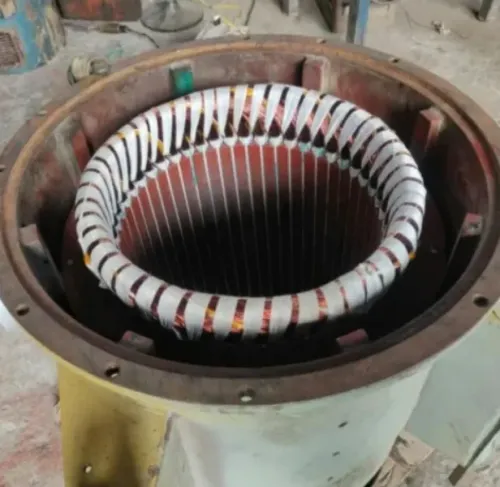
Generator maintenance discussions sometimes focus heavily on the engine. The alternator and associated electrical system also require attention.
Connections, insulation condition, terminal areas, output behaviour, control indications, and signs of overheating can provide important clues about generator condition.
If abnormal voltage, unusual noise, overheating, or insulation-related issues are observed, further investigation may be necessary.
Ask How Service Findings Are Documented
Maintenance reports can provide valuable information to plant teams.
A useful service report should clearly identify observations, completed activities, abnormal conditions, recommendations, and components requiring further attention.
This becomes particularly valuable when multiple maintenance engineers manage the same facility across different shifts.
Evaluate Local Service Capability
For businesses operating in Mumbai and nearby industrial areas of Maharashtra, practical service availability should form part of AMC evaluation.
Distance, equipment handling capability, technical experience, communication, and response arrangements can affect the usefulness of a maintenance agreement.
Gelstar Engineering Services supports DG set and industrial electrical equipment maintenance requirements for commercial and industrial customers in the Mumbai region.
Avoid Selecting Only on the Lowest Quote
The cheapest annual figure may not represent the lowest maintenance cost.
A narrow contract may exclude activities that the plant actually needs, while a broader contract may include unnecessary items. Neither approach is automatically better.
The objective should be matching the maintenance scope to equipment criticality and operating conditions.
Before finalising an AMC for DG sets, plant managers should document generator details, operating patterns, previous faults, expected support requirements, and internal maintenance capabilities. That information creates a stronger basis for comparing providers and selecting a maintenance arrangement suited to the facility rather than simply choosing the lowest annual quotation.