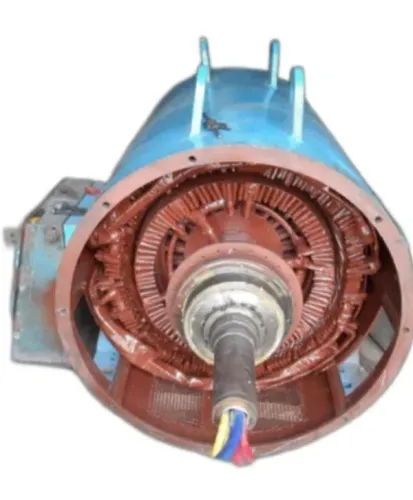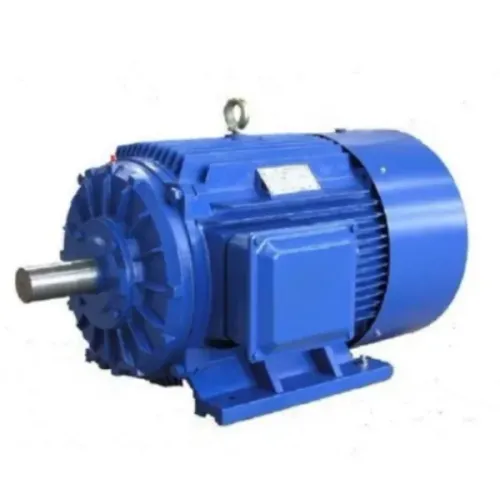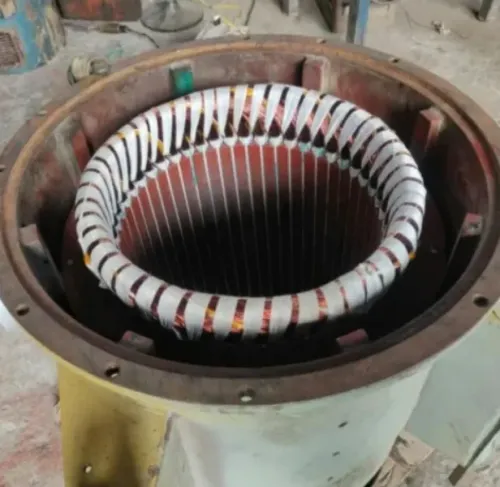
A failed industrial motor presents maintenance teams with an immediate question should it be repaired, rewound, or replaced?
There is no universal answer. Electric Motor Repair and Rewinding decisions should consider the condition of the equipment, operational importance, replacement availability, repair scope, and expected future service.
For industrial businesses in Mumbai, a structured decision can prevent both unnecessary replacement and repeated spending on equipment that is no longer economical to repair.
First Identify the Actual Failure
Not every motor breakdown requires rewinding.
A motor may stop because of bearing failure, damaged terminals, supply problems, mechanical loading, protection issues, or faults in associated equipment.
Rewinding becomes relevant when the winding or insulation system has deteriorated beyond a practical localized repair.
This is why diagnosis should come before quotation comparisons.
Consider the Overall Condition of the Motor
A technically successful rewind may still make little economic sense if several other major components are approaching the end of their usable life.
Inspect the condition of the
- Stator core
- Rotor
- Shaft
- Bearings and bearing housings
- Frame
- Cooling system
- Terminal arrangement
- Mounting points
A motor with a sound mechanical structure can be a stronger repair candidate than one with widespread deterioration.
Compare Downtime as Well as Cost
Maintenance decisions are often based on the repair quotation versus the price of a new motor. That comparison is incomplete.
The real cost can include production interruption, emergency logistics, installation modifications, commissioning, and the lead time for obtaining a suitable replacement.
For an uncommon motor, replacement may take significantly longer than repair. Conversely, a readily available standard motor may make replacement more attractive.
Check Equipment Compatibility
Replacing an existing motor requires more than matching its kW rating.
Important parameters can include voltage, speed, frame size, mounting arrangement, shaft dimensions, duty, enclosure, insulation requirements, and application characteristics.
Installing an unsuitable replacement simply because it is immediately available can create new operational problems.
Consider the Motor's Importance to Production
Criticality should influence the decision.
If one motor shuts down an entire production process, reliability and turnaround planning may matter more than the lowest initial expenditure.
For non-critical equipment with redundancy, maintenance teams may have greater flexibility to evaluate different options.
Mumbai factories can benefit from classifying motors according to operational criticality before failures occur.
Review the Failure History
Repeated failures are an important warning sign.
If the same motor has been rewound several times, determine whether the problem lies with the repair itself or the application.
Recurring failures may result from overload, poor alignment, voltage imbalance, contamination, inadequate cooling, excessive starts, bearing issues, or unsuitable operating conditions.
Replacing the motor without correcting these factors may simply transfer the same problem to new equipment.
Ask for a Technical Repair Scope
A useful repair proposal should make the scope understandable.
Depending on the failure, this might include winding work, insulation treatment, bearings, machining, cleaning, balancing-related work, testing, or other repairs.
Procurement managers should compare technical scope rather than choosing only by headline price.
Make the Decision From Evidence
There is no rule that old motors should always be replaced or that rewinding is always cheaper.
The correct decision depends on measurable equipment condition and operational circumstances.
Gelstar Engineering Services supports industrial motor repair and rewinding requirements in Mumbai, Maharashtra. For plant owners and maintenance teams, a condition-based decision that considers repairability, downtime, compatibility, and lifecycle value is more useful than automatically choosing either repair or replacement.