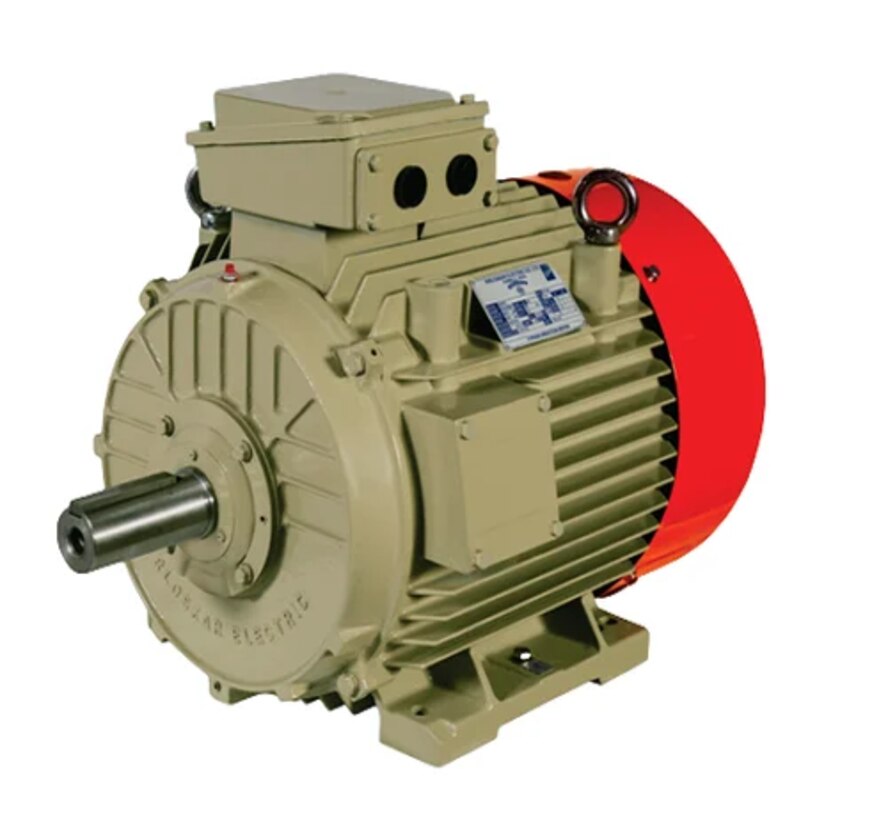
A Kirloskar motor that smells hot, trips an earth fault or runs above its normal temperature needs a diagnosis before anyone orders a rewind or bearing. You will be able to separate electrical, mechanical and cooling faults, specify the measurements and records required for repair, and decide when replacement is safer than rebuilding.
Key takeaways
- Match current, heat, noise and vibration before dismantling.
- Record nameplate data, protection history and safe insulation-test results.
- Compare rewinding, bearing repair and replacement using fault evidence and motor duty.
- Require a repair record and loaded acceptance test before returning the motor to service.
Match the symptom to the fault before dismantling
A thermal trip does not prove a rewound Kirloskar motor has a winding defect. Match the current, temperature, sound, vibration and protection history before dismantling.
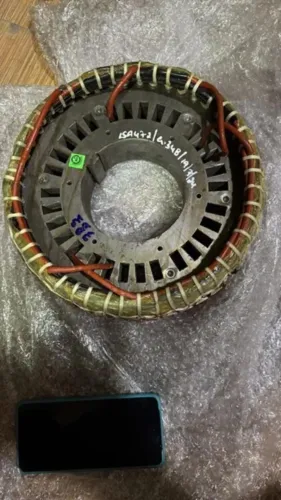
1. Winding failure symptoms include an insulation smell, earth-fault trips, visible carbon tracking, unequal phase resistance or rapidly falling insulation resistance. Confirm the suspicion with phase-to-phase resistance, insulation resistance and polarization index; a megohmmeter pass alone cannot exclude turn-to-turn faults.
2. Bearing failure symptoms are rumbling, growling, metallic noise, abnormal vibration, rising bearing temperature, shaft looseness or axial play. Check coupling alignment, soft foot and shaft condition because misalignment, pipe strain, belt tension or an unbalanced rotor can overload a sound bearing.
3. Overload or a driven-load jam produces high current, often in all three phases, with rising frame temperature and reduced speed. Check the driven machine, overload setting, starts per hour and terminal voltage before blaming the winding.
4. Phase loss, a loose connection or voltage imbalance produces unequal phase currents and rapid heating. Measure voltage at the motor terminals under load; NEMA MG 1 identifies 1% voltage unbalance as a practical upper limit.
5. Cooling failure produces motor overheating with normal or near-normal current. Inspect the fan, shroud, air passages, enclosure fouling, ambient temperature and heat-transfer path.
Kirloskar motor fault diagnosis should compare electrical readings with vibration and bearing temperature, not rely on an infrared spot reading. Record the evidence before opening the terminal box, since removing connections can erase the fault pattern.
Shut down the motor and capture evidence safely
Record the motor’s condition before dismantling it. A no-load spin can hide load-dependent overheating, voltage-unbalance effects, belt or coupling faults, and drive-induced bearing-current damage.
1. Stop the driven machine using its normal controls, then isolate every energy source: motor supply, VFD output, remote start circuit, heater, brake, hydraulic or pneumatic system, and stored mechanical energy. Apply motor lockout tagout to the isolator, identify the equipment, and prevent the shaft or driven machine from moving.
2. Check for backfeed and wait for the VFD DC bus to discharge according to its instructions. Use an approved voltage tester, test it on a known live source, test phase-to-phase and phase-to-earth at the motor terminals, then test the instrument again on the known source.
This is proving dead; do not open the terminal box before it is complete.
3. Before disconnecting cables, photograph terminal links, cable markings, gland positions, coupling or belt alignment, and visible contamination. Record the nameplate, trip history, winding temperature, ambient temperature, running current in all phases, and voltage at the motor terminals under load.
4. Record vibration at the drive and non-drive bearings, bearing temperature, rotation direction, unusual noise, and the driven load’s condition. Note blocked cooling passages, loose connections, burnt insulation, moisture, oil, and smell.
5. With the motor isolated and cables separated, measure phase-to-phase resistance between all winding pairs and record winding temperature. Perform an insulation resistance test with a suitable megohmmeter, then calculate the polarization index where the motor and test procedure permit it; disconnect electronic drives before applying test voltage. Preserve every reading for comparison after repair.
Read the nameplate and interpret insulation tests correctly
The Kirloskar motor nameplate tells you which test limits apply: record kW, voltage, frequency, full-load current, rpm, frame, insulation class, duty and service factor before judging the winding. Measure insulation resistance at the winding temperature and calculate polarization index (PI) as the 10-minute reading divided by the 1-minute reading.
| Finding | What it means | Decision |
|---|---|---|
| Low insulation resistance, low PI, dirt or moisture visible | Surface leakage or absorbed moisture may be the cause | Clean, dry and retest before opening coils |
| Acceptable insulation resistance and PI, but unequal phase resistance or failed comparison | A connection, coil or conductor is damaged | Repair the affected connection or coil if the core and insulation remain sound |
| Acceptable phase-to-ground readings but failed surge comparison | Turn-to-turn insulation is weak; ordinary insulation testing will miss it | Inspect for local coil repair or rewind |
| Persistent low readings after drying, carbon tracking, burnt insulation or repeated surge failure | Insulation damage has reached the winding system | Specify a full rewind after checking the core |
For a low-voltage random-wound motor, use a controlled surge test for motor winding comparison. Set surge voltage and acceptance criteria from the winding design and shop procedure; excessive voltage can damage marginal insulation. Compare all three phase resistances, inspect the coils and core, and trend results rather than relying on one number.
- Do not approve a rewind from insulation-resistance failure alone.
- Record the test instrument, voltage, temperature, readings and PI calculation.
- A motor that passes phase-to-ground testing can still have a shorted turn.
Choose between rewinding, bearing repair and motor replacement
A Kirloskar motor rewinding decision should follow the fault pattern, winding evidence and repair economics—not a failed megohmmeter reading alone. Low insulation resistance can come from moisture or contamination, while a motor that passes it can still have turn-to-turn faults.
| Option | What it means | When it applies |
|---|---|---|
| Local coil repair | Replace or repair a limited damaged coil while preserving the sound winding | One or a few coils are damaged, the core is clean, and winding data remains verifiable |
| Full rewinding | Remove and replace the complete stator winding | Burnt insulation, multiple shorted coils, widespread earth faults, or repeated local repairs |
| Bearing replacement | Replace the bearing and correct its cause | Noise, play or temperature confirms mechanical wear without winding damage |
| Motor replacement | Install a correctly matched new motor | The core, shaft or frame is damaged, repair cost approaches replacement cost, or failures keep recurring |
| Higher-efficiency motor | Replace with an IE3 or IE4 motor after checking compatibility | Long operating hours justify lower losses and the frame, starting torque and drive suit the new motor |
Bearing replacement will not cure fluting caused by variable-frequency drive bearing currents. Washboard marks, raceway pitting or shaft-to-frame voltage while the drive runs require a shaft-grounding device, insulated or ceramic bearing, and a verified grounding path.
Choose rewinding only after checking soft foot, alignment, bent shaft, pipe strain, belt load and resonance. Gelstar Engineering Services can assess these mechanical causes alongside winding condition during an overhaul.
For motor replacement, match frame designation, mounting, shaft dimensions, key, terminal-box position, IP rating, duty, insulation class, bearings and encoder or brake provisions—not just kW and rpm.
Related services
Ac Motor Rewinding, Repair & Service Ac Motor Rewinding, Repair & Service Rewinding Services for AC/DC Motors Ours is a noted firm engaged in offering repair and maintenance services for AC/DC Motors. View service → |
Electric Motor Rewinding & Repairs D.C Motor Rewinding Backed by proficient quality team, we are able to offer superior quality rewinding AC and DC motors. View service → |
Demand a repair record and a loaded acceptance test
The evidence is a traceable repair file plus a loaded motor repair acceptance test—not a clean no-load spin.
- motor rewind records showing the winding design, conductor size, turns, insulation system, impregnation or varnish process, core condition and final test results
- electrical records for phase-to-phase resistance, insulation resistance, polarization index, surge comparison, no-load current in each phase and terminal voltage under load
- mechanical records for bearing type and replacement, shaft condition, rotor balance, vibration, soft-foot correction and motor alignment after coupling or belt installation
- an acceptance sheet recording direction of rotation, bearing temperature, frame temperature, ambient temperature, speed, current in all phases and the protection settings
Run the repaired motor with its actual driven equipment at the required duty until temperatures reach thermal stability. Record shaft torque, speed and motor input power, or document the driven machine’s measured load; a brief unloaded spin cannot prove torque delivery or expose belt loading, coupling faults or load-dependent overheating.
Check voltage unbalance at the motor terminals while loaded, not only phase-to-phase voltage at no load. NEMA MG 1 identifies 1% voltage unbalance as a practical upper limit; current unbalance and heating can become severe above it.
The file should also show that ventilation, ambient temperature, upstream connections, overload settings and the driven machine were checked. No short test proves service life, but stable temperature, acceptable vibration, correct alignment and complete test records provide evidence that the repair is not repeating the original failure.
Frequently asked questions
How do you identify the likely cause of a Kirloskar motor trip?
Compare current, temperature, sound, vibration and protection history before dismantling. A thermal trip alone does not prove winding failure.
What evidence should you capture before shutting down a motor?
Record operating current, temperature, vibration, sound, trip details and protection settings, then isolate the motor safely before inspection and testing.
How should you interpret insulation resistance tests on a Kirloskar motor?
Read the motor nameplate first, document the test voltage and result, and interpret insulation resistance with winding condition, temperature and test history in view.
When should you rewind, repair bearings or replace a motor?
Choose rewinding when winding damage is confirmed, bearing repair when bearing evidence explains the fault, and replacement when repair cost, condition or duty makes it the better option.
What should a motor repair record and acceptance test include?
Request the fault findings, parts replaced, test results and repair details, followed by a loaded test that confirms current, temperature, vibration and operating performance.