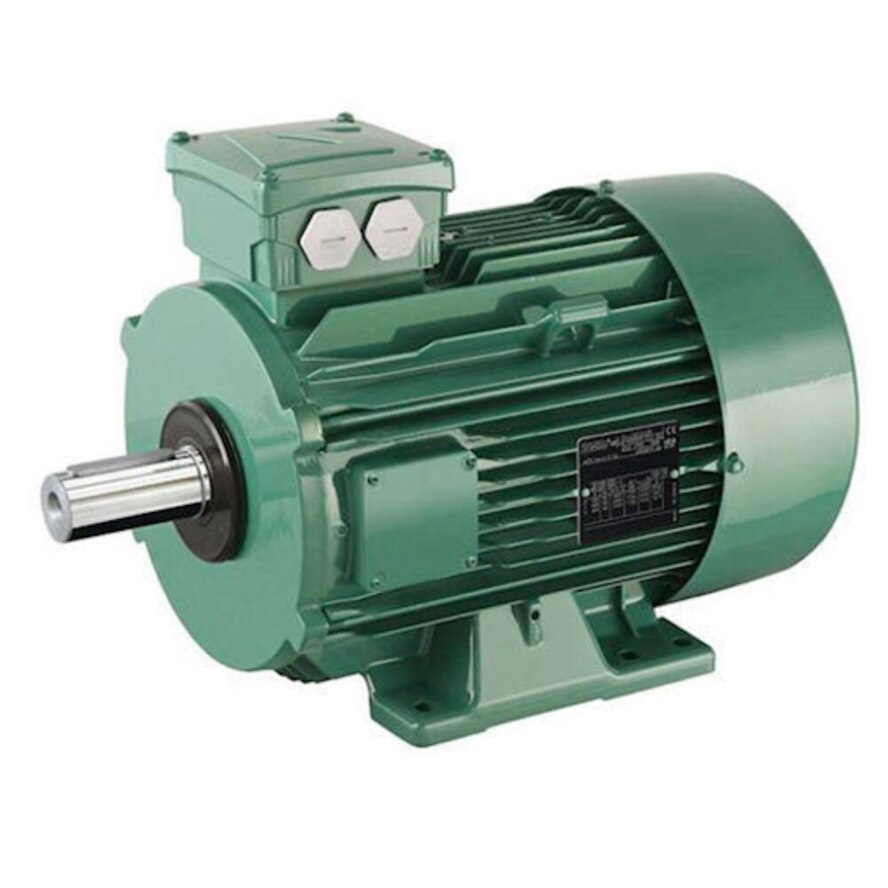
A Hindustan motor that returns to service only to fail again needs a failure-chain investigation, not another automatic rewind. You will be able to separate motor damage from supply, drive, alignment, lubrication, cooling and process faults, then choose the repair, overhaul or replacement path that addresses the cause.
Key takeaways
- Record load, trips, damage and repair details after every failure.
- Trace faults through the supply, drive, motor and driven machine.
- Request insulation, winding resistance, vibration and alignment evidence before rewinding.
- Require a documented cause-correction plan before approving another repair.
Build a Failure History Before Blaming the Motor
Treat repeated Hindustan motor breakdowns as one failure chain until evidence proves otherwise. Build a breakdown history that follows each event from operating conditions through trip, damage, repair and restart. A rewind can restore a burned winding while the overload, cooling restriction, misalignment or process load that caused it remains active.
1. Record the failure date and symptom tracking for every event: earth fault, nuisance trip, high no-load current, winding burnout, bearing seizure, overheating or excessive vibration. Add motor load, phase currents, voltage, winding temperature, vibration readings and the protection trip code.
2. Compare the records for repetition. Bearing failures after alignment work point toward soft foot, coupling forces or lubrication; winding damage after high-load operation points toward overload, low voltage, phase imbalance, restricted cooling or excessive starts.
3. Log what changed before each failure, including production rate, driven-machine condition, starter or VFD settings, ambient temperature, lubrication interval and motor mounting work. Note whether the motor was reinstalled with the same base and coupling.
4. Record evidence from the repair: insulation-resistance and polarization-index readings, phase resistance, bearing condition, shaft or rotor damage, and the exact repair performed. A rising vibration trend or falling insulation reading matters more than one isolated result.
If failures recur after the same repair, do not call them separate bad motors. Treat the unchanged operating condition as the leading suspect, and require the next investigation to test that condition before another rewind.
Trace the Fault Through the Supply, Drive and Driven Machine
Measure at the motor terminals under load before condemning the motor. Record all three phase-to-phase voltages and currents.
Voltage imbalance and current imbalance are different findings: a small voltage imbalance can create a much larger negative-sequence current and rotor heating, while unequal cable impedance, loose terminals, winding asymmetry or a drive-output problem can produce similar current readings.
Match the evidence to the fault source:
- Supply: single-phasing, unstable voltage, or a voltage imbalance that appears before the starter points to the incoming circuit, cable, fuse, breaker or connection.
- Starter: contactor damage, loose overload connections, incorrect overload settings or excessive starts identify starter faults. Set thermal protection against nameplate full-load current, starting method, service factor, ambient temperature and actual load; defeating trips turns an overload into winding damage.
- VFD: compare commanded frequency with output voltage and current, inspect fault history, and check motor-cable shielding and grounding. Bearing fluting or frosting requires a high-frequency frame-ground path plus a shaft-grounding ring or suitable insulated bearing.
- Alignment and driven machine: 1× vibration suggests unbalance; 2× vibration suggests misalignment or looseness. Check soft foot with the motor mounted, before final alignment.
- Lubrication and cooling: wrong grease, over-greasing, blocked air passages, failed fans or high ambient temperature explain bearing and winding heat without an electrical defect.
- Operation: overload, restricted process flow, frequent starts or running beyond the duty cycle can cause repeated trips and overheating.
Use vibration spectra, thermography and load readings together; overall vibration velocity alone does not identify the cause. A repaired motor will fail again if the initiating condition remains.
Request These Tests Before Authorising Another Rewind
Do not authorise another rewind until testing separates insulation damage from core, bearing and assembly faults. A winding can pass an insulation-resistance test yet have turn-to-turn weakness, while a damaged core can pass electrical tests and still overheat in service.
| Test | What it reveals | What to request |
|---|---|---|
| Phase-to-phase resistance comparison | Unequal resistance, loose connections or damaged conductors | Record each phase, winding temperature and lead connections |
| Insulation resistance megohmmeter | Insulation leakage from winding to frame or ground | Test voltage, winding temperature and readings by phase; compare at 40 °C under IEEE 43 |
| Polarization index | Moisture, contamination or deteriorating ground insulation | A timed reading, not only a single megohm value; trend against previous results |
| Surge testing | Weak turn-to-turn insulation that operating or switching stress can expose | Phase-to-phase comparison and the test voltage used |
| Core-loss or loop test | Localised interlaminar insulation damage and abnormal eddy-current heating | Test after a rewind or serious overheating event |
| Vibration, thermography and bearing inspection | Imbalance, looseness, misalignment, hot bearings and lubrication damage | Spectrum data, bearing condition, temperatures and photographs |
Treat a polarization index near 2 as a screening benchmark for many older low-voltage motors, not universal proof of health. Temperature changes the result sharply: insulation resistance roughly doubles for each 10 °C decrease and halves for each 10 °C increase.
Ask the technician to check soft foot with the motor in its actual mounting condition, correct it, and then verify alignment. Tight hold-down bolts do not prove the frame is seated correctly.
Choose Between Targeted Repair, Overhaul and Replacement
A Hindustan motor is repairable when its frame, rotor, shaft and stator core remain dimensionally sound and the repair removes the failure cause. Choose bearing work or balancing for a local defect; choose replacement when structural damage or repeated failures make the repair uneconomic or unreliable.
| Option | What it means | When it applies |
|---|---|---|
| Bearing work | Replace bearings, inspect fits and correct lubrication or current paths | Bearing noise, temperature or clearance is abnormal, while bearing seats and shaft journals remain sound |
| Balancing | Correct rotor unbalance and verify vibration after assembly | Vibration follows rotor unbalance, deposits, looseness or a repaired rotor |
| Shaft repair | Restore a journal or keyway, then check runout and fit | A repairable journal is worn, but the shaft is not distorted |
| Overhaul | Strip, inspect, rewind only if needed, machine, rebalance and test | Multiple wear points exist, or service history and inspection show the motor remains structurally viable |
| Replacement | Install a correctly rated motor and resolve the initiating fault | The motor has a damaged motor frame, cracked rotor, distorted shaft, or worn bearing seats that cannot be restored economically |
| Standby motor | Keep a tested spare ready for rapid changeover | The driven process cannot tolerate repair lead time or a single motor failure |
Do not approve a bearing alone for repeat bearing failures. Check soft foot with the motor bolted in its operating position, correct it before alignment, and record coupling alignment, fits, grease, vibration and bearing-current controls.
A standby motor buys uptime; it does not excuse leaving misalignment, overload, poor cooling or a VFD bearing-current problem in service.
Give the Contractor Evidence and Require a Cause-Correction Plan
A contractor cannot separate a motor defect from an installation or process fault without site evidence. Send a motor nameplate photograph, frame size and duty, failure dates, operating load, ambient conditions, and the exact trip or alarm that preceded each shutdown.
1. Provide the trip history with current, voltage, winding temperature, vibration, start frequency, and process changes recorded against each event.
2. Include the alignment and installation record: soft-foot readings, coupling or belt details, shim changes, bolt-tightening sequence, bearing fits, grease type and quantity, and cooling-path checks.
3. Identify the starter or VFD, cable length, grounding arrangement, switching settings, and any evidence of bearing-current damage. Do not describe a drive-fed motor as suitable from nameplate voltage alone.
4. Require the repair specification to state the suspected failure chain and the correction: alignment and soft-foot limits, load or cooling changes, protection settings matched to nameplate current, and a defined shaft-grounding or insulated-bearing strategy where needed.
5. Require documented phase resistance, insulation resistance, polarization index, surge, vibration, thermography, bearing, and no-load current results before release. Record test values, not “passed.”
6. Require a signed alignment and installation record, protection-trip verification, uncoupled and loaded run observations, and acceptance limits before the motor returns to service.
Whether you appoint Gelstar Engineering Services or another contractor, make the cause-correction plan part of the work order; a replacement bearing or rewind alone is not closure.
Related services
Ac Motor Rewinding, Repair & Service Ac Motor Rewinding, Repair & Service Rewinding Services for AC/DC Motors Ours is a noted firm engaged in offering repair and maintenance services for AC/DC Motors. View service → |
Electric Motor Rewinding & Repairs D.C Motor Rewinding Backed by proficient quality team, we are able to offer superior quality rewinding AC and DC motors. View service → |
Frequently asked questions
What should you record before blaming a Hindustan motor?
Record the motor’s load, operating temperature, trip type, protection settings, visible damage, repair performed and restart conditions for each failure.
Where should you look for the cause of repeated motor breakdowns?
Trace the complete chain: incoming supply, cables, starter or variable-frequency drive, motor, coupling, alignment, bearings, cooling and driven-machine load.
Which tests should you request before authorising another rewind?
Request insulation resistance and polarisation index, winding resistance, surge comparison, vibration, bearing checks, alignment measurements and supply or drive-quality readings.
When is targeted repair better than overhaul or replacement?
Choose targeted repair when the fault is isolated and the core is sound; choose overhaul for accumulated wear, and replacement when damage, age or duty makes repair uneconomical.