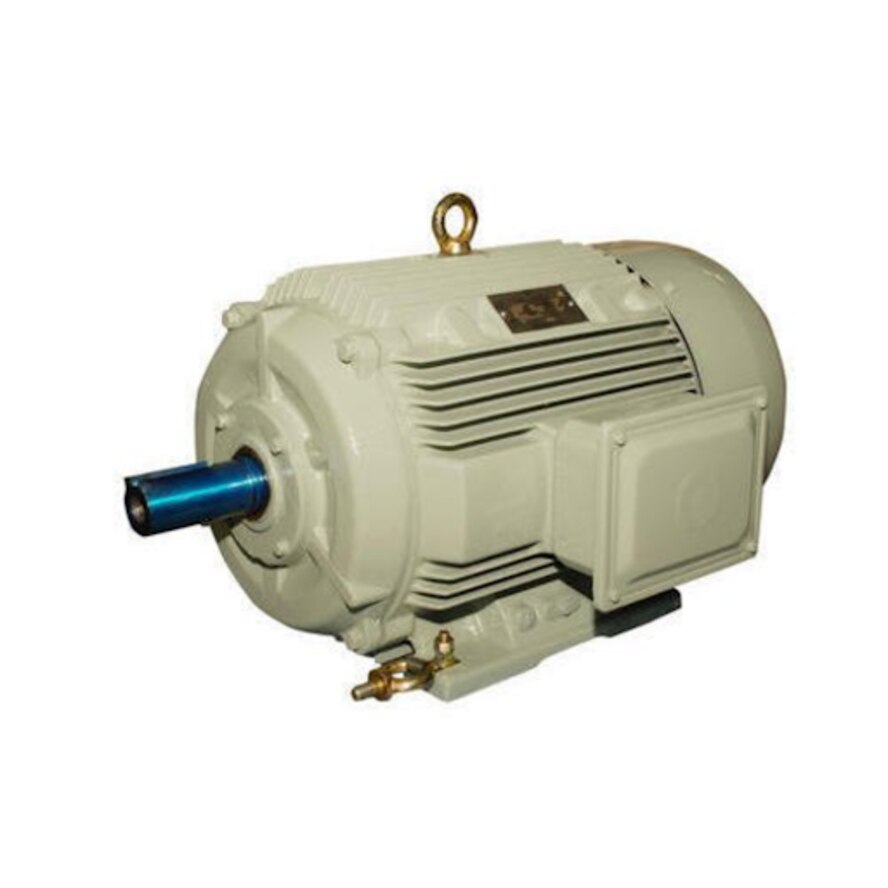
A failed Crompton Greaves motor does not automatically need rewinding: the same symptoms can come from a bearing, coupling, supply fault, overload, blocked cooling path or driven machine. By the end, you will know what data to record, which tests separate electrical from mechanical damage, and when repair is safer than replacement.
Key takeaways
- Photograph the nameplate, terminal links, cables, shaft and coupling before removal.
- Compare insulation resistance, winding resistance, surge results and vibration readings before rewinding.
- Choose bearing replacement, rewinding or a new motor based on test results and lifecycle cost.
- Accept the repair only after checking current balance, vibration, temperature and rotation.
What motor data should you record before requesting repair?
1. Create an identification and receiving record before removing the motor or sending it to a workshop. Photograph the Crompton Greaves motor nameplate, terminal-box links, cable positions, shaft and coupling. Record the motor frame size, kW or hp rating, rated voltage, full-load current, frequency, rated speed, duty, insulation class, enclosure type and motor serial number.
Note whether it is direct-on-line, star-delta or inverter-fed.
2. Before disconnection, record running current on each phase, rotation direction, vibration readings with measurement locations, bearing temperature, unusual noise and the connected load. Mark every cable and protect the shaft, keyway and leads during transport. These details distinguish an electrical fault from a bearing, alignment or driven-load problem.
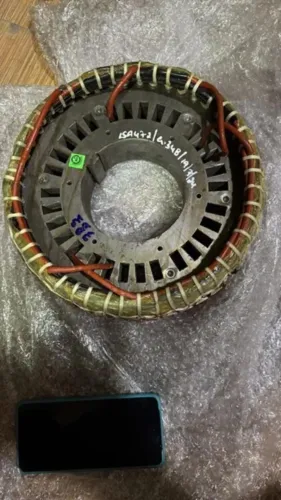
3. Require a motor winding data record before stripping. Ask for slot count, turns per coil, conductor size, parallel paths, coil span, connection, phase sequence and lead identification.
A catalogue motor with the same voltage and kW rating is not an adequate replacement specification; rebuilding from those figures alone can change impedance, starting current, torque and rotation direction. Preserve the original record with photographs and workshop findings.
How can you separate winding failure from bearing and system faults?
Use the symptom pattern before approving a rewind. Motor fault triage starts with location, timing and operating condition, not a megohm reading alone.
Growling, rumbling or rough bearing vibration and noise that follows shaft speed point toward bearing damage; rising bearing temperature, grease expelled from seals, radial shaft play, or frosting and bearing fluting strengthen that diagnosis. On a VFD motor, check shaft voltage, grounding and bearing-current paths instead of adding grease alone.
- Inspect the coupling, driven shaft and load when vibration rises at the coupling end, the motor runs quietly uncoupled, or vibration changes at operating load. Motor misalignment diagnosis must include soft foot, pipe strain, angular or parallel misalignment, a bent shaft, unbalanced coupling and excessive belt tension.
- Treat differing phase currents, rapid tripping, burnt smell, darkened coils, or failed phase-to-phase and phase-to-frame tests as winding clues.
- Check phase loss, voltage imbalance, loose terminals, overload, frequent starts, blocked fan or shroud, contamination, and a seized or overloaded driven machine. A sound motor can overheat from any of these faults.
| Fault pattern | Strongest lead | Next check |
|---|---|---|
| Winding | Unequal current or failed insulation test | Connections, resistance correction and surge testing |
| Bearing | Speed-related roughness, heat or shaft play | Bearing fits, lubrication and electrical discharge paths |
| System or load | Coupling-end vibration or load-dependent change | Alignment, coupling, ventilation, supply and driven equipment |
Which tests prove a winding needs repair, and what does a quality rewind preserve?
Start with visual inspection: look for burnt coils, loose connections, displaced conductors, carbon tracking and damaged insulation. A motor winding resistance test comes next, but correct readings for winding temperature, test-lead resistance and parallel paths. Unequal cold readings alone do not prove failure.
Use a megohmmeter insulation resistance test between phases and from each phase to the frame. Record the 1-minute and 10-minute readings, then calculate the polarization index as 10-minute resistance divided by 1-minute resistance.
Add a surge test motor winding check for turn-to-turn weakness; acceptable megohm insulation can still hide a turn fault that fails at operating voltage.
Run a core-loss or loop test before and after coil removal. Excessive stripping heat can damage interlaminar insulation and increase iron loss, even when resistance readings look normal.
A quality rewind preserves all of these original features:
- Turns per coil and conductor cross-section
- Coil pitch, parallel paths and connection configuration
- Insulation system, phase sequence and lead identification
- Impregnation and curing method
For an inverter-fed motor, match the repair to DC-bus voltage, switching pulses, cable length, grounding and common-mode stress. Ordinary line-frequency wire and varnish can fail again.
| Test or compare | What it reveals | Why it matters |
|---|---|---|
| Resistance balance | Conductor or connection differences | Correct temperature and circuit effects first |
| Insulation resistance and polarization index | Phase-to-phase and phase-to-frame condition | Does not prove turn insulation |
| Surge test | Turn-to-turn weakness | Finds faults megohm testing can miss |
| Core-loss test | Interlaminar damage | Confirms stripping did not harm the core |
After repair, evaluate no-load current, temperature rise, efficiency and power factor, rather than accepting a motor that merely starts.
When is bearing replacement, rewinding or a new motor the right decision?
Choose the smallest repair that removes the verified failure. Motor bearing replacement fits damaged races, rolling elements or seals; rewinding fits proven winding or core damage; a new motor fits a serviceable repair no longer offers acceptable reliability, efficiency or delivery time.
| Option | Decision | Checks before approval |
|---|---|---|
| Bearing replacement | Replace the bearing, preserving the original bearing clearance, including bearing clearance C3, and locating/non-locating arrangement | Measure bearing-seat diameter, housing bore, shoulder squareness, shaft runout and end float |
| Rewind | Rewind when winding or core tests fail while the frame, shaft and rotor remain serviceable | Confirm insulation, surge and core-loss findings, then preserve turns, conductor size, coil pitch and connections |
| New motor | Compare against repair when lead time, efficiency, parts or downtime dominate | Check footprint, mounting, shaft height, coupling fit, efficiency class and site modifications |
Identical bearing dimensions do not correct a worn shaft seat or housing bore. Install the bearing by applying force through the ring with the interference fit; force through rolling elements can create brinelling, noise and later vibration.
Repair loose terminal links or damaged leads, replace a damaged fan or shroud, and approve motor shaft repair when a worn journal requires machining or replacement. Balance and align the motor when vibration is mechanical.
Motor rewinding versus replacement is a site decision, not a nameplate decision. A new, more efficient motor can require base or coupling changes and discard a known shaft fit. Gelstar Engineering Services can compare workshop findings with your mounting, coupling, load and downtime constraints before approval.
Related services
Ac Motor Rewinding, Repair & Service Ac Motor Rewinding, Repair & Service Rewinding Services for AC/DC Motors Ours is a noted firm engaged in offering repair and maintenance services for AC/DC Motors. View service → |
Electric Motor Rewinding & Repairs D.C Motor Rewinding Backed by proficient quality team, we are able to offer superior quality rewinding AC and DC motors. View service → |
How should you accept and monitor the repaired motor?
Accept the motor only when a repair record links the original nameplate and winding data to final test results, not merely when it starts. Before coupling the load, verify insulation results, phase-resistance balance, rotational direction and no-load current.
After installation, check soft foot, coupling alignment, shaft runout and terminal tightness. Repeat vibration and temperature measurements at defined speed and load. For post-repair motor testing, record measurement locations at the drive- and non-drive-end bearing housings, horizontal, vertical and axial directions, the frequency range, operating speed and evaluation method.
ISO 20816 vibration evaluation does not make one unspecified overall velocity or acceleration number a complete acceptance limit.
Use this motor repair acceptance checklist:
- Compare load current, temperature rise, vibration, power factor, efficiency and delivered performance with the pre-failure baseline using the same test method where practical.
- If failure recurs, measure supply voltage and phase imbalance; verify single-phasing protection and overload settings; inspect ventilation, count starts and examine contamination.
- For VFD service, review cable shielding, grounding and shaft-current controls. Insulated or hybrid bearings and shaft-grounding devices may need to work together to control VFD bearing current.
- Keep photographs, readings, test certificates, dismantling notes and final alignment values in the motor history.
| Measure | Compare with | Acceptance question |
|---|---|---|
| Load current | Pre-failure phase currents | Is the repaired winding carrying the expected current? |
| Temperature rise | Baseline at defined load | Is cooling adequate? |
| Vibration | Same locations, band and speed | Does ISO 20816 evaluation pass? |
| Power factor and efficiency | Defined baseline test | Did the rewind preserve performance? |
| Delivered performance | Torque, output or process result | Does the motor drive the load correctly? |
Frequently asked questions
What motor data should you record before requesting repair?
Record the frame size, kW or hp, voltage, full-load current, frequency, rated speed, duty, insulation class, enclosure type and serial number. Photograph the nameplate, terminal-box links, cable positions, shaft and coupling.
How can you separate winding failure from bearing and system faults?
Use insulation-resistance and winding-resistance tests for electrical faults, then compare vibration, bearing temperature, shaft condition, alignment, coupling and driven-load performance.
Which tests prove a winding needs repair?
Compare phase resistance, insulation resistance, polarisation index and surge-test results. A quality rewind preserves the original turns, conductor size, winding connection, insulation system, balance and nameplate performance.
When is bearing replacement, rewinding or a new motor the right decision?
Replace bearings when the winding passes tests and mechanical damage is local. Rewind when the core and frame remain serviceable. Choose a new motor when damage, efficiency loss, repeated failures or repair cost outweighs reuse.
How should you accept and monitor the repaired motor?
Verify rotation, no-load and loaded current, phase-current balance, vibration, bearing temperature, insulation results and operating temperature. Record baseline readings and trend them after commissioning.