A port generator AMC must prove more than engine start-up: it must keep cranes, reefer outlets, gates, pumps, fire systems and IT loads supplied through transfer, distribution and synchronising equipment. By the end, you will be able to calculate the required capacity, compare contract types, define the maintenance schedule and write measurable service obligations.
Key takeaways
- Size for essential loads, motor starting and the largest crane or reefer demand.
- Include alternator, engine, controls, fuel system, batteries, switchgear and protection testing.
- Match response times and spare holdings to terminal criticality and outage consequences.
- Require logged load tests, battery checks, insulation tests and restoration reports.
What loads must a port backup generator carry?
Do not size a container-terminal generator from the connected-load total. Size it against the operating scenario that combines essential demand, motor starting and the largest crane or reefer requirement.
1. Define the supply boundary. State whether the set supports the full terminal, a selected emergency bus, or only life-safety and IT loads. Exclude nonessential cargo equipment explicitly.
2. Map each scenario’s essential loads: crane drives, reefer-container outlets, gate barriers, OCR systems, customs and documentation servers, lighting, drainage pumps, fire pumps, communications and other IT equipment.
3. Record every load’s kW, kVA, power factor, starting method and duty cycle. Separate continuous loads from intermittent crane movements and motor starts. Include crane duty cycles and projected reefer growth.
4. Check the worst starting-current combination, voltage dip during motor acceleration and harmonic current from variable-frequency drives, UPS systems and rectifiers. A nameplate total does not prove acceptable load acceptance.
5. Select the required standby, prime or continuous rating under ISO 8528. State permitted operating hours and the site load profile, then add planned expansion and capacity for a failed set.
6. For N+1 capacity, prove that the remaining sets can automatic-start, synchronise, close breakers, and share kW and kVAR without exceeding ratings. Test black-start sequencing, reverse-power protection and fail-to-synchronise alarms.
An AMC for a generator for container terminals should preserve this load study and revise it after crane changes, reefer expansion or distribution modifications. Without that record, capacity remains an assumption rather than a defensible design.
What equipment must the AMC include?
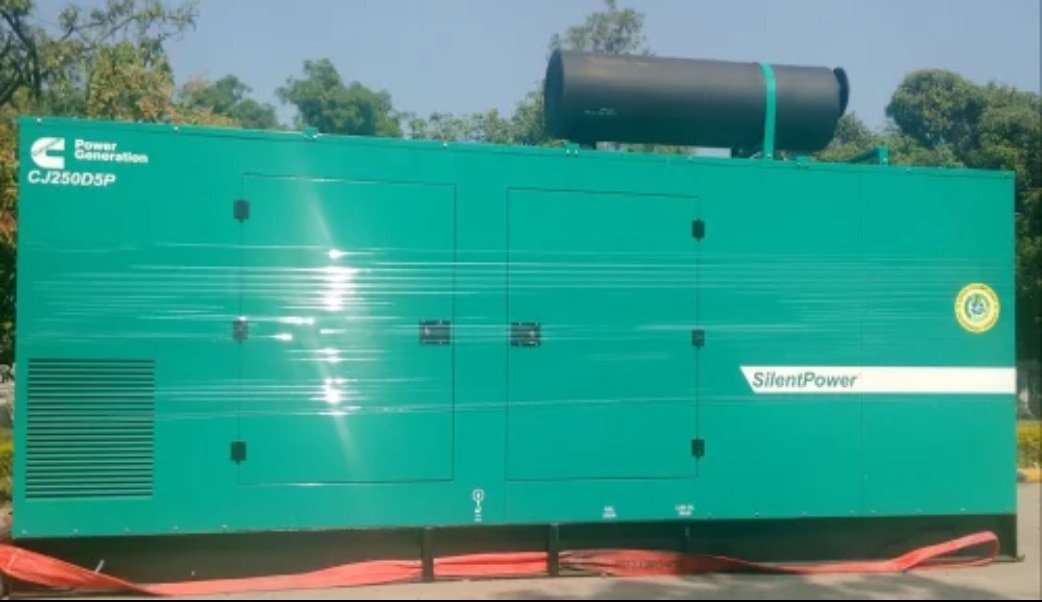
A generator AMC for ports covers the complete standby power chain, not merely the diesel engine. Attach every item to an asset tag, location, make, model and serial number so an excluded ATS or switchboard cannot be mistaken for covered equipment.
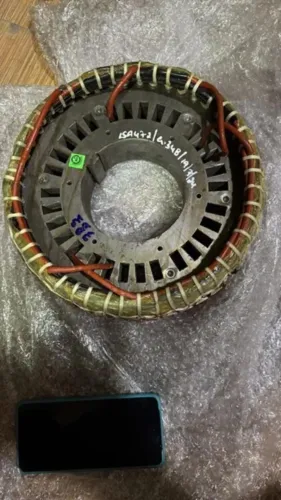
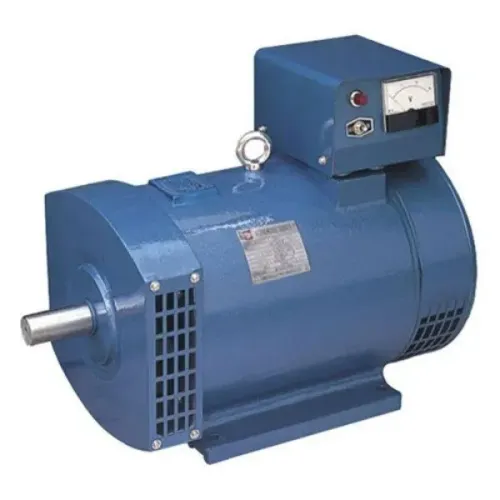
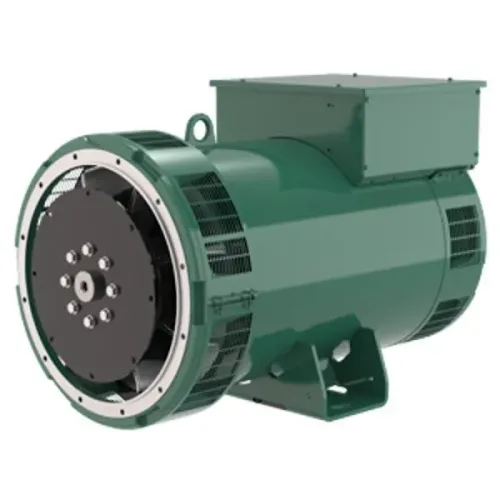
- The asset register must identify the engine, alternator, radiator and coolant circuit, fuel tank and filters, exhaust, starter batteries, charger, generator breaker, automatic mains failure panel, automatic transfer switch, synchronising or paralleling panel, protection relays, distribution boards, transformers, high-tension switchgear, remote annunciation and grounding.
- Preventive maintenance must include lubrication, filter replacement, belt and hose inspection, coolant testing, fuel-water and sediment checks, exhaust back-pressure and leakage inspection, alternator terminal and winding checks, controller alarms, breaker operation, ATS sensing thresholds, interlocks and transfer-return sequences.
- List fault diagnosis and emergency call-outs as separate obligations, with response times and reporting requirements. A routine service visit does not automatically include attendance after a failed start or breaker trip.
- For synchronised sets, test automatic start, black-start sequencing, synchronisation, kW and kVAR load sharing, reverse-power, under-frequency, over-frequency and fail-to-synchronise trips. Confirm that each set can close onto the emergency bus.
- State exclusions by name: civil works, fuel supply, major engine overhaul and transformer replacement. A generator that runs locally but cannot transfer or distribute power is not an available terminal supply.
Which generator service contract fits your terminal?
A preventive-maintenance AMC is the right baseline for a terminal that can fund corrective repairs separately. It covers scheduled inspections, consumables, adjustments and test reports; repairs and major parts remain chargeable. A dg service contract for logistics should match the outage consequence, not simply the annual fee.
| Model | Commercial commitment | Best fit |
|---|---|---|
| Preventive-maintenance AMC | Planned service; repairs and major parts billed separately | Sites with maintenance staff and repair budget |
| Comprehensive AMC | Defined labour and parts included | Reefer, fire and critical IT loads; inspect exclusions carefully |
| Non-comprehensive AMC | Lower fixed fee; parts and corrective work billed separately | Noncritical loads or cost-controlled sites |
| Breakdown-only support | Payment begins after failure | Noncritical loads, never reefer continuity or fire systems |
| Rental-generator contingency | Temporary capacity during failure or overhaul | Sites needing cover while a set or plant is unavailable |
A comprehensive contract must name exclusions for batteries, injectors, alternators, controllers, switchgear and contaminated-fuel damage. A rental arrangement must state set rating, delivery time, cabling, fuel, changeover method, earthing, noise and emissions responsibilities.
Ask whether the provider supports one set and a synchronised multi-generator plant, including the AMF panel, distribution boards, transformers and HT switchgear. Gelstar Engineering Services is one provider to evaluate against that complete interface, not an engine-only scope.
Before comparing annual fees, request a marked asset register, sample service report, parts list and escalation matrix. The cheapest engine AMC can leave the transfer path outside the promise.
What maintenance schedule and tests prove readiness?
1. Make terminal backup generator maintenance auditable with a daily log. Record fuel level, leaks, alarm status, battery-charger indication, coolant level, oil level, room ventilation and visible corrosion. Missing entries hide deterioration until the generator fails to start.
2. Schedule a monthly inspection and exercise. Where NFPA 110 applies, run the set for at least 30 minutes; use a load bank when site load does not demonstrate adequate loading.
Record engine hours, start time, crank duration, oil pressure, coolant temperature, cranking battery voltage, alternator output, frequency, voltage regulation, exhaust temperature, breaker status and ATS transfer and return.
3. Match quarterly or six-month work to engine hours and the manufacturer’s instructions, not to calendar visits alone. Change oil and filters, inspect belts and hoses, test coolant, clean radiators, inspect fuel for water and sediment, and check valve clearance when due.
During annual shutdown maintenance, inspect terminals, lugs, breakers, ATS mechanisms, heaters, earth connections and protection trips.
4. Set overhaul intervals by engine hours, starts, load factor and OEM limits. Demand load-bank records for kW, kVA, power factor and step-load response, plus insulation resistance, winding resistance, earth resistance and protection-trip results. Inspect alternator windings, terminals, bearings and airflow; isolate AVR and controller electronics before insulation testing.
Trend every result rather than accepting a pass/fail note.
How should response, spares and restoration be written into the AMC?
Write the AMC as a clock-based service-level schedule, not a promise to “attend promptly.” A generator AMC for ports must grade failures by the load they threaten and apply the same clock during nights, weekends and public holidays.
| Criticality | Telephone acknowledgement and remote diagnosis | Arrival, temporary power and restoration |
|---|---|---|
| Reefer or fire-system set, failed start | 15 minutes | 1 hour; temporary-power decision within 2 hours; restore within 4 hours |
| Crane, gate or IT supply, breaker trip | 30 minutes | 2 hours; decision within 3 hours; restore within 8 hours |
| Nonessential lighting fault | 2 hours | 8 hours; restore within 24 hours |
The contract must name primary and secondary contacts, 24-hour telephone numbers, site-access rules, induction, permits, escort arrangements, isolation and lockout procedures, and the permitted outage window for staged transfer tests.
- Require an on-site or regional stock plan for starter motors, batteries, chargers, fuel filters, coolant hoses, belts, AVR or controller modules, breakers and protection relays.
- Make terminal backup generator maintenance reports trend-based: record start time, crank duration, alarms, source and breaker status, ATS transfer result, fuel-water findings, corrective action, technician identity and test-equipment details.
- Log maintenance, test, emergency and demand-response running hours separately where emissions rules require it.
- Accept repair only after automatic start, transfer, load acceptance, load sharing, protection-trip reset and return to utility without an unsafe interruption.
Frequently asked questions
What loads must a port backup generator carry?
Base the rating on the operating scenario: essential terminal services, motor-starting currents, the largest crane demand and the required reefer load. Do not use the connected-load total alone.
What equipment must a generator AMC include?
Specify service coverage for the diesel engine, alternator, fuel system, cooling system, starting batteries and charger, control panel, breaker, cabling, protection devices, exhaust system and associated changeover or synchronising equipment.
Which generator service contract fits a container terminal?
Choose the contract by load criticality, operating hours, generator redundancy, outage consequences and required restoration time. A contract for an emergency lighting set is not enough for crane, reefer or life-safety loads.
What maintenance schedule and tests prove generator readiness?
Require documented inspections, no-load and loaded runs, battery and charger checks, coolant and fuel checks, alarm verification, insulation-resistance testing and load-bank testing at defined intervals.
How should response, spares and restoration be written into the AMC?
Write separate response times for remote diagnosis, technician arrival and temporary restoration. List critical spares, escalation contacts, reporting fields, safe-work duties and the acceptance test required before returning the generator to standby.