A factory generator is only as dependable as its batteries, fuel system, changeover panel, electrical path and documented test results—not merely its ability to start. Use the framework below to define the maintenance scope, set service intervals, demand useful records and compare contract options before signing.
Key takeaways
- Match AMC terms to the DG set’s duty, load and power factor.
- Require loaded testing, not only a no-load start.
- List service records, compliance documents and exclusions in writing.
- Compare response times, spares coverage and escalation terms.
What a factory DG AMC should cover
The contract must start with the generator’s duty, not its nameplate size. Record whether it is standby, prime, or continuous-rated; its actual kW and kVA load, power factor, parallel-operation requirement, and critical loads. A standby set priced and serviced as prime-power equipment creates the wrong maintenance frequency and an uncovered failure risk.
A factory DG maintenance contract should cover the complete emergency-power path:
- Scheduled engine servicing, oil and filter replacement, coolant checks, belts, hoses, air and fuel filters, radiator, starter motor and alternator
- Fuel-tank inspection for water, sediment, microbial growth and fuel age, with cleaning or fuel polishing when test results justify it
- Battery terminals, starting batteries, charger, AVR, control panel, protection devices and fault-code review
- AMF or ATS operation, circuit-breaker condition, interlocks, earthing, exhaust, acoustic enclosure and the complete changeover sequence
- Loaded testing, preventive-maintenance reports and emergency breakdown response
A local start does not prove operational availability if the AMF panel fails to transfer a critical load. For an AMC for DG sets in Navi Mumbai, specify remote acknowledgement, technician arrival, diagnosis, temporary restoration and permanent repair as separate response targets.
State whether the scope includes HT relay functional checks or secondary injection, breaker timing or contact-resistance tests, transformer-oil breakdown-voltage testing and earth-grid testing. Also assign responsibility for running-hour, fuel, emission, noise, used-oil, filter, battery and contaminated-absorbent records needed for audits.
DG maintenance calendar and component checklist
Inspect the whole emergency-power path, not just the diesel engine: engine, alternator, fuel system, cooling system, starting system, controls, changeover equipment, exhaust, earthing and enclosure. The engine manufacturer’s hour-based schedule takes precedence over a calendar-only plan.
Record the nameplate rating separately from actual duty: standby, prime or continuous operation, running hours, kW, kVA, power factor and critical loads. A lightly loaded set can wet-stack and carbon-foul, while a battery can lose cranking capacity during silence.
Component checklist:
- Engine oil, oil filter, fuel filter, air filter, coolant, radiator, belts and hoses
- Tank low point, fuel age, sediment, free water and microbial contamination indicators
- Battery age, terminal condition, charger output, alarm status, starting voltage and starter motor
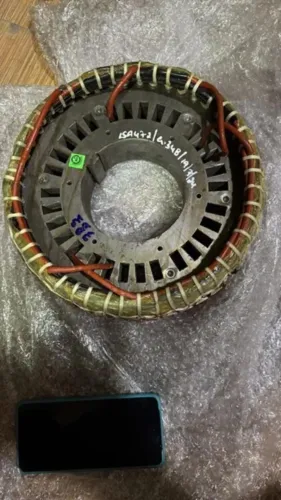
- Alternator windings, bearings, AVR, AMF or ATS panel, protection relays and circuit breaker
- Exhaust, silencer, flexible connections, acoustic enclosure, ventilation and earthing
| Interval | Contractor actions | Required record |
|---|---|---|
| Monthly | Inspect leaks, levels, belts, hoses, battery and charger; start the set and record hours, voltage, frequency, fault codes and load percentage. | Measured readings and observations |
| Quarterly | Service oil and filters at the OEM hour interval; inspect radiator, starter, alternator, AVR, fuel lines, exhaust and AMF or ATS operation. | Parts, readings and alarm results |
| Six-monthly | Test fuel for water and sediment; polish or clean it when results justify action; test battery capacity, breaker operation, earthing and changeover sequence. | Test reports and corrective actions |
| Annually | Complete diesel generator annual maintenance, including load-bank testing across the required load range and a full protection, cooling and exhaust review. | Load results, service report and replaced-part details |
Why loaded testing matters more than a no-load start
A no-load start proves only that the engine can crank and run. It does not prove that the alternator produces stable voltage, the breaker closes, or the AMF/ATS panel transfers factory loads. Light running also encourages wet stacking and carbon deposits.
Use this procedure for each standby or prime-power set:
1. Confirm the rated duty, critical loads, kW, kVA and power factor. Inspect oil, coolant, fuel level, batteries, charger, belts, hoses, exhaust and earthing before starting.
2. If the factory cannot provide a safe, variable plant load, connect a correctly rated load bank. Apply steps such as 25%, 50%, 75% and the approved maximum load, holding each step long enough to record voltage, frequency, current, kW, kVA, power factor, temperatures and alarms.
3. Test the AMF or ATS by simulating utility failure under controlled conditions. Confirm generator start, warm-up delay, generator-breaker operation, load transfer and stable running. Verify that utility restoration returns the load, opens the generator breaker, stops the set after its cool-down period and leaves no fault indication.
4. Never force a closed-transition or parallel transfer unless the switchgear is designed and approved for synchronising. Record every failed start, unstable reading, breaker trip and alarm.
Include these readings and the actual load percentage in the factory DG maintenance contract. A diesel generator annual maintenance schedule that records only running hours and a weekly no-load start has not demonstrated emergency-power readiness.
Records, compliance documents and contract exclusions to specify
Put the generator’s duty in writing: prime, standby or continuous; actual kW and kVA load; power factor; parallel operation; and the critical loads served. A standby-rated set must not receive a continuous-duty schedule or price. The diesel generator annual maintenance schedule must follow engine hours and the OEM calendar intervals.
Require each visit to produce:
- Running-hour, fuel-use and start-test logs, plus preventive-maintenance and breakdown reports.
- Oil, filter, coolant and replaced-part details, fault codes, technician observations and photographs.
- Electrical readings for battery and charger voltage, insulation resistance, earth resistance, alternator output, AVR performance, phase balance, breaker operation, AMF or ATS changeover and loaded kW, kVA and power factor.
- Load-bank reports showing test duration, load steps, frequency, voltage and abnormal alarms.
- CPCB type-approval, conformity and emission-related records applicable to the engine, rated output and emission stage; a generic “pollution certificate” is not enough.
- Noise measurements at the specified location and operating condition, with enclosure doors, seals, silencer and ventilation paths checked.
- MPCB or factory-audit records, including used-oil, filter, battery and contaminated-absorbent disposal manifests. Name the party responsible for submission and retention.
| Contract item | State as included or excluded |
|---|---|
| Filters, lubricants, coolant and belts | Brand, quantity, intervals and disposal |
| Batteries, load-bank hire, statutory tests and transport | Separate price or fixed allowance |
| ATS faults, rewinding, radiator or fuel-tank repair | Explicit exclusion, approval limit and response time |
| Major overhaul, control-panel replacement and taxes | Separate quotation and authorisation process |
This structure makes an AMC for DG sets in Navi Mumbai auditable instead of merely responsive.
How to compare AMC providers and emergency response terms
Compare the cost of an AMC with the cost of a failed production shift, not with the cheapest quotation. For an AMC for DG sets in Navi Mumbai, match the provider’s scope to prime, standby or continuous duty, actual kW and kVA load, power factor, parallel operation and critical loads.
| Option | What you receive | Main limitation |
|---|---|---|
| Breakdown-only support | Call-out repair after failure | No scheduled prevention; parts and technician arrival may be uncertain |
| Manufacturer agreement | OEM procedures, parts and escalation | Higher cost; confirm it covers the complete emergency-power system |
| In-house maintenance | Immediate site familiarity and control | Requires qualified electrical staff, spares, test equipment and leave cover |
| Independent AMC | Planned visits plus negotiated emergency support | Verify technician competence, parts policy and escalation capacity |
A factory DG maintenance contract must separate remote acknowledgement, technician arrival, diagnosis, temporary restoration and permanent repair. Require loaded testing or a load-bank test, and state whether OEM, equivalent or refurbished parts are allowed.
Before appointment, verify:
- A written scope covering the engine, alternator, AMF/ATS, relays, charger, batteries, fuel, exhaust, earthing and changeover.
- Electrical personnel for breaker timing, contact resistance, relay testing, interlocks and earth-grid tests where HT equipment connects to the DG.
- Minimum emergency stock: batteries, belts, filters, fuses, hoses, sensors and contactors.
- Responsibility for MPCB and audit records, including fuel logs, emissions, noise, test certificates and disposal documents.
- Actual references for similar factories and escalation contacts. Gelstar Engineering Services is one provider to assess against these same evidence-based criteria.
Frequently asked questions
What should a factory DG AMC cover?
Specify preventive maintenance, oil and filter changes, battery checks, cooling-system work, fuel-system inspection, electrical testing, fault diagnosis, loaded testing and emergency support.
How often should a diesel generator be maintained?
Use the manufacturer’s hour-based schedule alongside a calendar plan. Track engine hours, starts, load profile and critical components rather than relying on a fixed annual visit alone.
Why is loaded testing more useful than a no-load start?
A no-load start proves that the engine runs. Loaded testing checks voltage stability, frequency, temperature, smoke, cooling performance and protection operation under an actual electrical burden.
Which DG records and documents should the AMC include?
Require service reports, test readings, replaced-part details, engine-hour records, breakdown logs, warranty terms, statutory documents and clear exclusions for fuel, batteries, major overhauls and external faults.
How should you compare DG AMC providers?
Compare technician availability, response and restoration times, spare-parts access, service frequency, loaded-test capability, escalation contacts, exclusions and penalties for missed visits or delayed response.